When my wife and I plan a family trip, we don’t sit down and divide every job perfectly in half. We lean into what each of us is good at.
My wife is the accommodations queen. She can find the place that actually works for our family—the location, the space, the details I probably wouldn’t think about until we were already standing there with two tired kids.
Me? I want to know what we’re going to do.
Give me the hikes, waterfalls, scenic overlooks and places worth exploring. I start building the adventure list.
And let’s be honest: if accommodations were entirely up to some of us dads, there’s a decent chance we’d look at the car and think, We could probably sleep in that.
Start With What Each Parent Does Well
One of the easiest ways we’ve found to make trip planning less overwhelming is to stop pretending we both need to be equally involved in every decision.
She handles a lot of the accommodation side. I focus on adventures and activities. We still make the trip decisions together, but we’re not duplicating every bit of work.
Your strengths might be completely different. Maybe Dad is the hotel researcher and Mom builds the itinerary. Maybe one person watches the budget while the other figures out food. It doesn’t really matter who owns which part.
The useful question is: What does each of us naturally do well?
Start there.
I Had to Stop Planning Trips for the Dad Version of Me
I love hiking. So when I look at a destination, my brain can very quickly turn a family vacation into a list of trails.
That works great if I’m planning a trip for myself.
It doesn’t work nearly as well when I’m traveling with young boys.
I’ve learned that my boys can’t simply wake up, hike all day, eat dinner and happily repeat the whole thing tomorrow. Even when they enjoy the adventure, they still need time that feels like theirs.
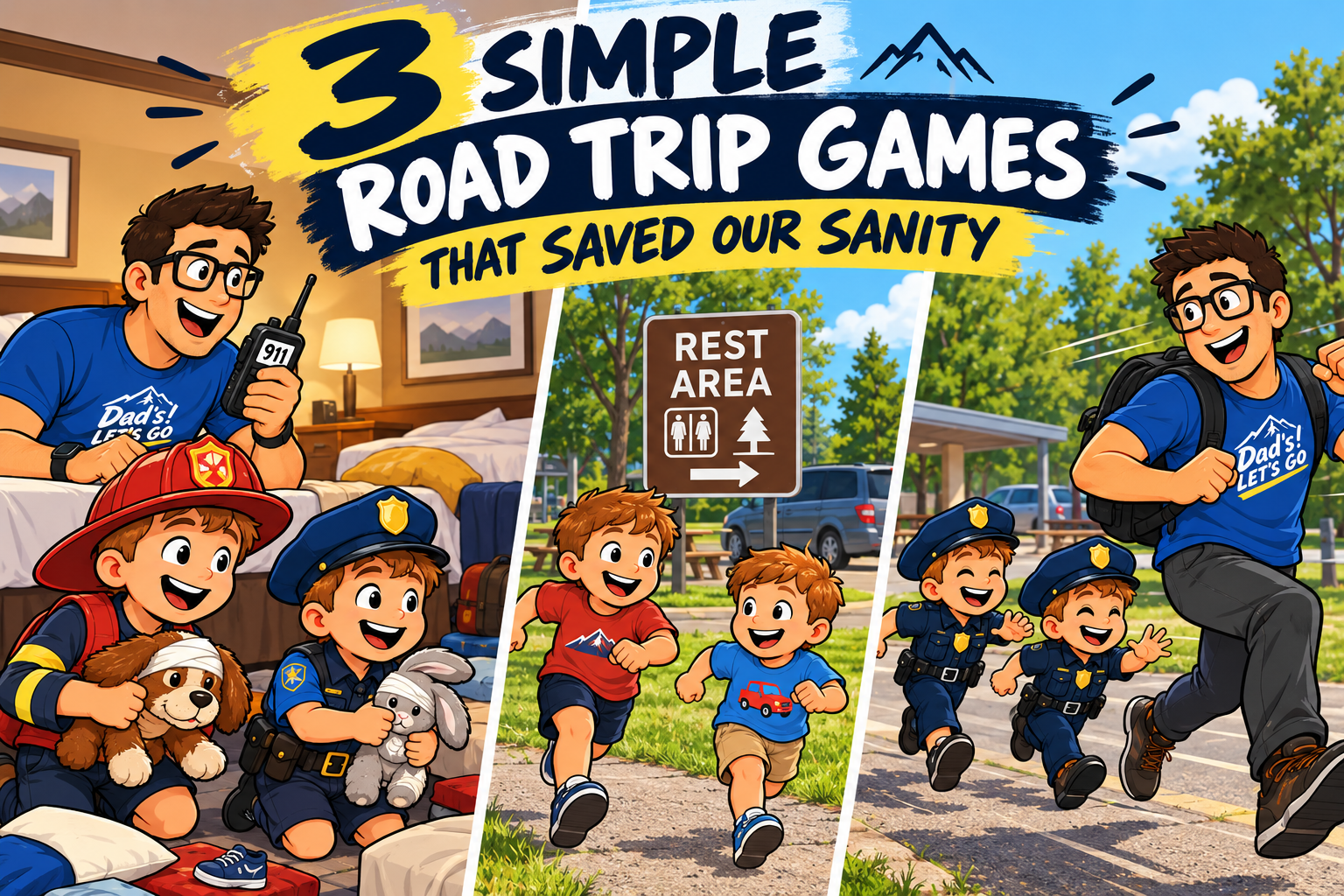
Sometimes that’s a playground. Sometimes it’s an easy morning. Sometimes it’s swimming, snacks, wandering around somewhere without an agenda or going back to where we’re staying and doing absolutely nothing impressive. On our last trip, we even came up with three simple road-trip games for the moments between adventures.
Those aren’t interruptions to the vacation.
They’re part of the vacation.
Plan Three Kinds of Time
When I’m looking at a family trip now, I try to think beyond a list of attractions. A good day usually needs some balance between three different kinds of time.
Adventure Time
This is the reason we’re excited about the trip: the hike, waterfall, beach, museum, scenic drive or whatever adventure brought us there.
Kid Time
This is something that doesn’t have to make the travel brochure. A playground can be one of the best stops of the entire day. The boys get to run, climb and play without us constantly directing what comes next.
Slow Time
This is the part I used to underestimate. Young kids—and their parents—need room to recover. A slower breakfast, an afternoon break or an early night can save the next adventure.
I don’t try to divide every day into perfect thirds. The point is simply to make sure I’m not scheduling adventure after adventure and wondering why everyone is falling apart.
Build a To-Do List, Not a Must-Do List
I still love building the trip list. I want to know the best hikes, the overlooks, the waterfalls and the places we might regret missing.
The difference is that I’m trying to treat that list as options, not obligations.
If we have ten things we’d love to do and only make it to six, that doesn’t mean we failed at the trip. It means we had choices when the weather changed, somebody was tired or the playground unexpectedly became the highlight of the afternoon.
A family itinerary needs breathing room.
Have a Plan B Before You Need One
Family adventures don’t always cooperate with the itinerary. Weather changes. Kids melt down. A trail takes longer than expected. Something you were excited about turns out to be a terrible fit that day.
I’ve learned this lesson the hard way. On one family hike, a toddler meltdown left us in the woods with a plan that simply wasn’t working anymore. The day wasn’t saved by forcing the original adventure to succeed. It was eventually salvaged by changing direction, giving everyone time and finding a playground.
That’s why flexibility deserves a place in the plan before the trip even starts.
If you’d like the full story behind that lesson, read When Everything Goes Wrong: What to Do When the Adventure Goes Sideways.
What I Want Our Family Trips to Become
I still want big adventures. I want my boys to see mountains, waterfalls, trails and places that make all of us stop and look around.
But I’m learning that the best family trip isn’t the one where Dad successfully checks every item off his list.
It’s the one where we planned together, used each other’s strengths and left enough room for the family we actually brought with us—not the perfectly rested imaginary family from the itinerary.
Let your partner be great at what they’re great at. Bring what you’re good at. Build the adventure list. Add kid time. Protect some slow time. And when the plan stops working, change the plan.
The goal isn’t a perfect itinerary.
It’s a trip your family is glad they took.
Dads, let’s go.