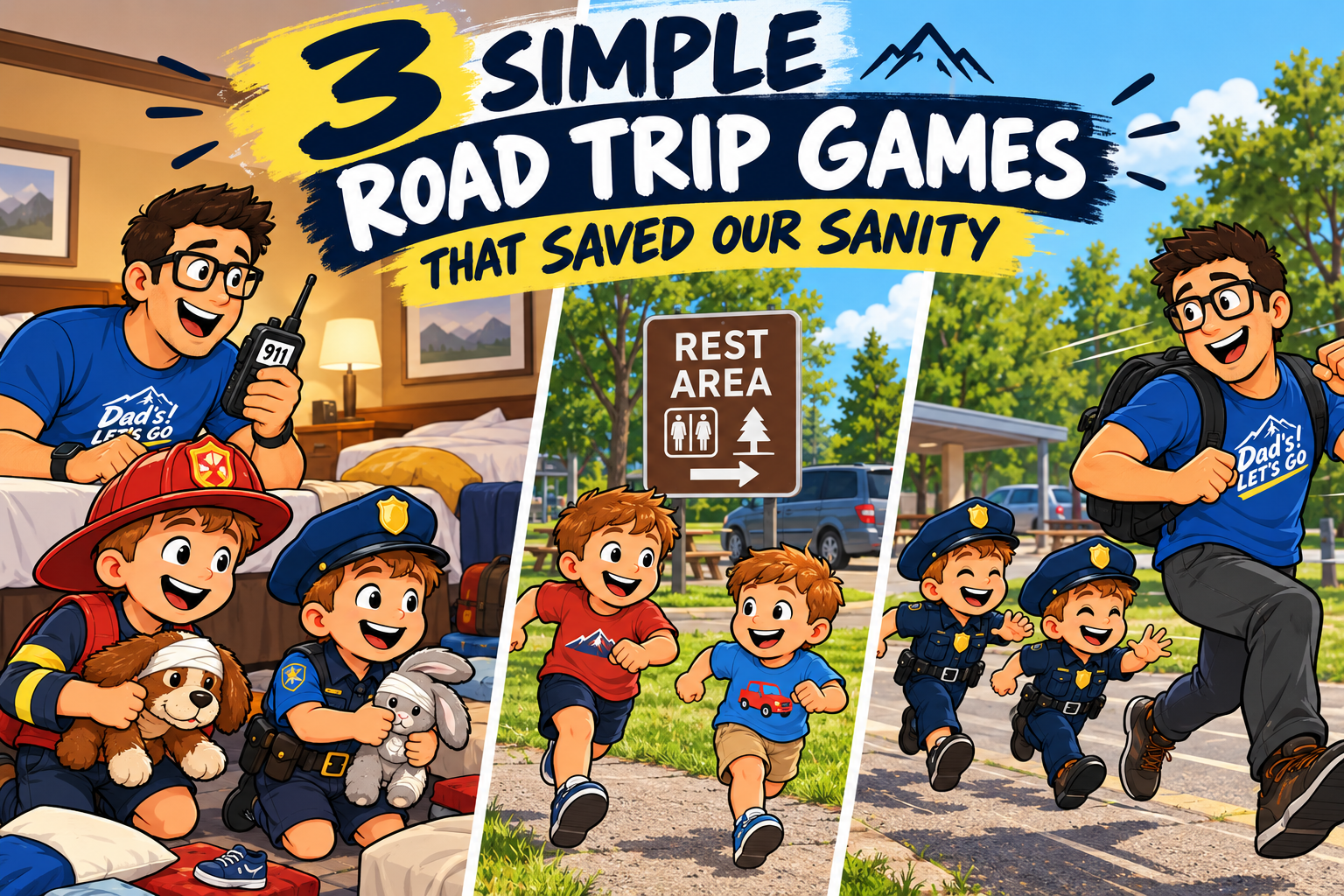
The ladder meltdown that made me think differently
We had just returned from a long family road trip. Everyone was exhausted. My older son was playing with a ladder when things escalated with his younger brother. He hit his brother, and the ladder was taken away.
I needed to keep both boys safe, but I was tired too. I stayed in the room, concentrated on my breathing, and tried to keep my voice calm. Eventually I stepped away, and my son settled. It reminded me of something I wrote about in When My Kids Fight, I See Red: managing my own reaction is part of parenting through conflict.
Then I had my own emotional meltdown. I had held myself together during his hardest moment, but afterward I struggled. That experience stuck with me.
We were often getting through the meltdowns, then moving on because everyone was relieved. I was hesitant to bring them up afterward, worried that talking about what happened would set everything off again. But skipping that calm follow-up meant missing opportunities to learn together.
That is why I built a simple three-part reminder: BEFORE, DURING, AFTER. It is not a magic fix. It is something to help me remember what to try when parenting gets hard.
Need a quick reminder right now? Get the free BEFORE, DURING, and AFTER meltdown cards in the Dad’s! Let’s Go Toolkit →
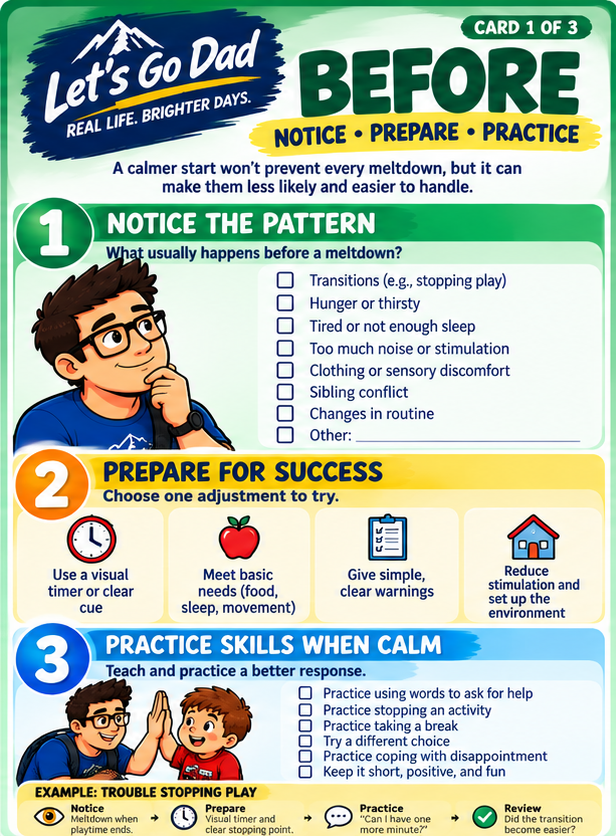
1. BEFORE — Notice, Prepare, Practice
Some of the most useful work happens before emotions are running high. I cannot prevent every meltdown, and I do not want my boys to avoid every disappointment. But I can pay attention to what makes certain moments harder.
Notice the pattern
Transitions, stopping a favorite activity, hunger, tiredness, noise, uncomfortable clothing, or sibling conflict can make an already difficult moment harder. The goal is to notice patterns, not assume every child has the same triggers.
Prepare for success
Try one small adjustment at a time: a visual timer, a predictable stopping point, a snack, or less noise. If ending play regularly causes trouble, a timer and a clear plan might be worth testing.
Practice when calm
When the boys are relaxed, we can rehearse asking for help, requesting a little more time, or taking a break. Practice is easier before the emotions are overwhelming.
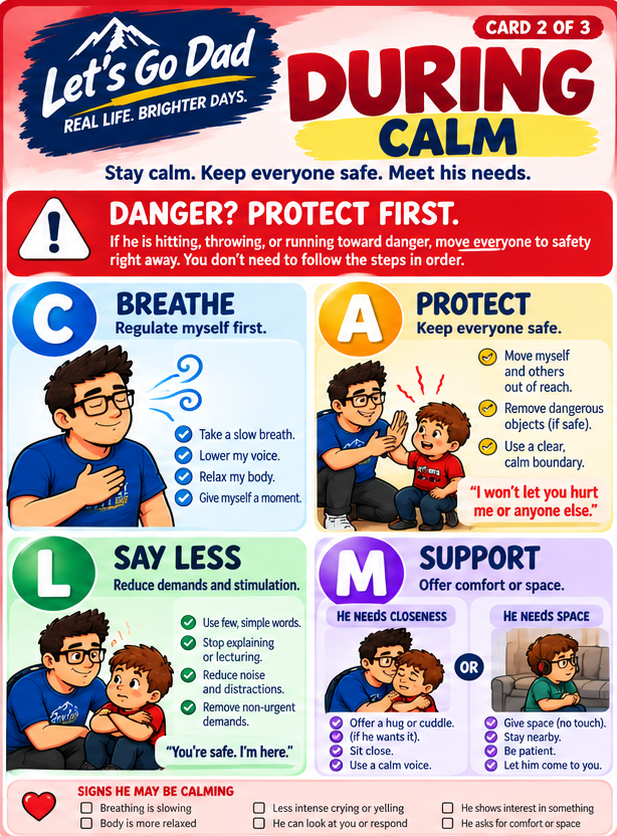
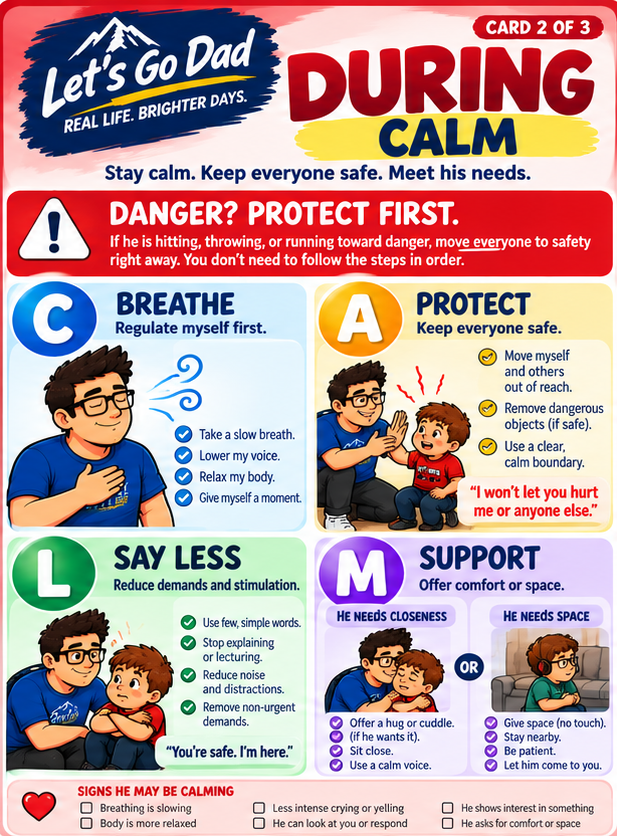
2. DURING — CALM
In the middle of a meltdown, I often want to explain everything. But a long lecture is rarely useful when a child is overwhelmed. I need something simpler to remember.
C — Breathe
Take a slow breath, lower my voice, and relax my posture. I do not have to match my child’s intensity.
A — Protect
Safety comes first, even if it interrupts the steps. Move siblings out of reach, remove dangerous objects when safe, and set a clear limit: “I won’t let you hurt anyone.” If the situation cannot be managed safely, get additional help.
L — Say less
Use a few calm words: “You’re safe. I’m here.” Save explanations and lessons for later. Reduce unnecessary noise and demands where possible.
M — Support
My boys do not always want the same kind of support. One may want closeness and a cuddle. The other may need space. I can offer comfort without forcing touch, eye contact, or conversation.
3. AFTER — The 3 Rs
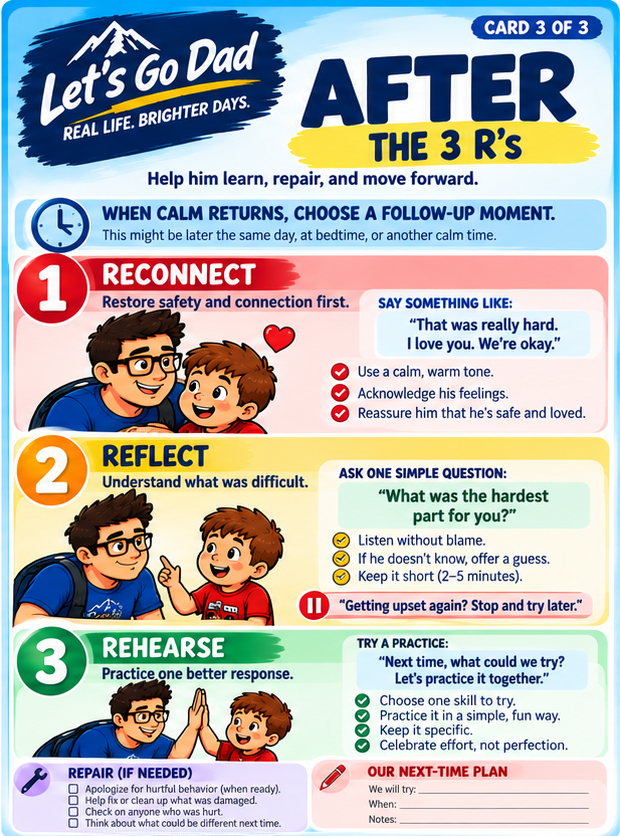
This is the part I used to skip. Once everyone was calm, I wanted to leave the hard moment behind. But a short conversation later—when we are both ready—can help us prepare for next time.
Reconnect
Start with the relationship: “That was hard. I love you. We’re okay.” There is no need to rush into correcting behavior.
Reflect
Ask one simple question: “What was the hardest part?” Listen without turning it into an interrogation. If my child cannot explain, I can offer a gentle observation instead.
Rehearse
Pick one small thing to try next time and practice it together. If someone was hurt or something was damaged, we can also repair the harm when ready. If the conversation becomes upsetting again, stop and return to it later.
Parents need an after, too
The ladder incident reminded me that staying calm for my child does not mean I feel calm afterward. I may need to step away safely, settle my own body, and reconnect when I am ready. My recovery matters because it affects what I can bring to the next hard moment. I have written about the limits of my energy in The Dad Battery. The same lesson applies here: I cannot keep pouring patience out without noticing when I need to recover.
I made this toolkit for my kids, but I need its reminders too. I want to remember that the work does not end when the room gets quiet. There is still space to reconnect, reflect, and try something different next time.
Success is not always ending a meltdown quickly. Sometimes it is protecting both kids without yelling. Sometimes it is recognizing that one child needs a hug and the other needs room. Sometimes it is coming back later and practicing one small skill.
Save the three-card Meltdown Response Toolkit
Keep the BEFORE, DURING, and AFTER cards on your phone or find them together on the Dad’s! Let’s Go Toolkit page.
These are practical, research-informed parenting reminders drawn from what I am learning at home—not a clinically validated treatment. Frequent or dangerous aggression may call for individualized professional guidance.
Dads, let’s go.